
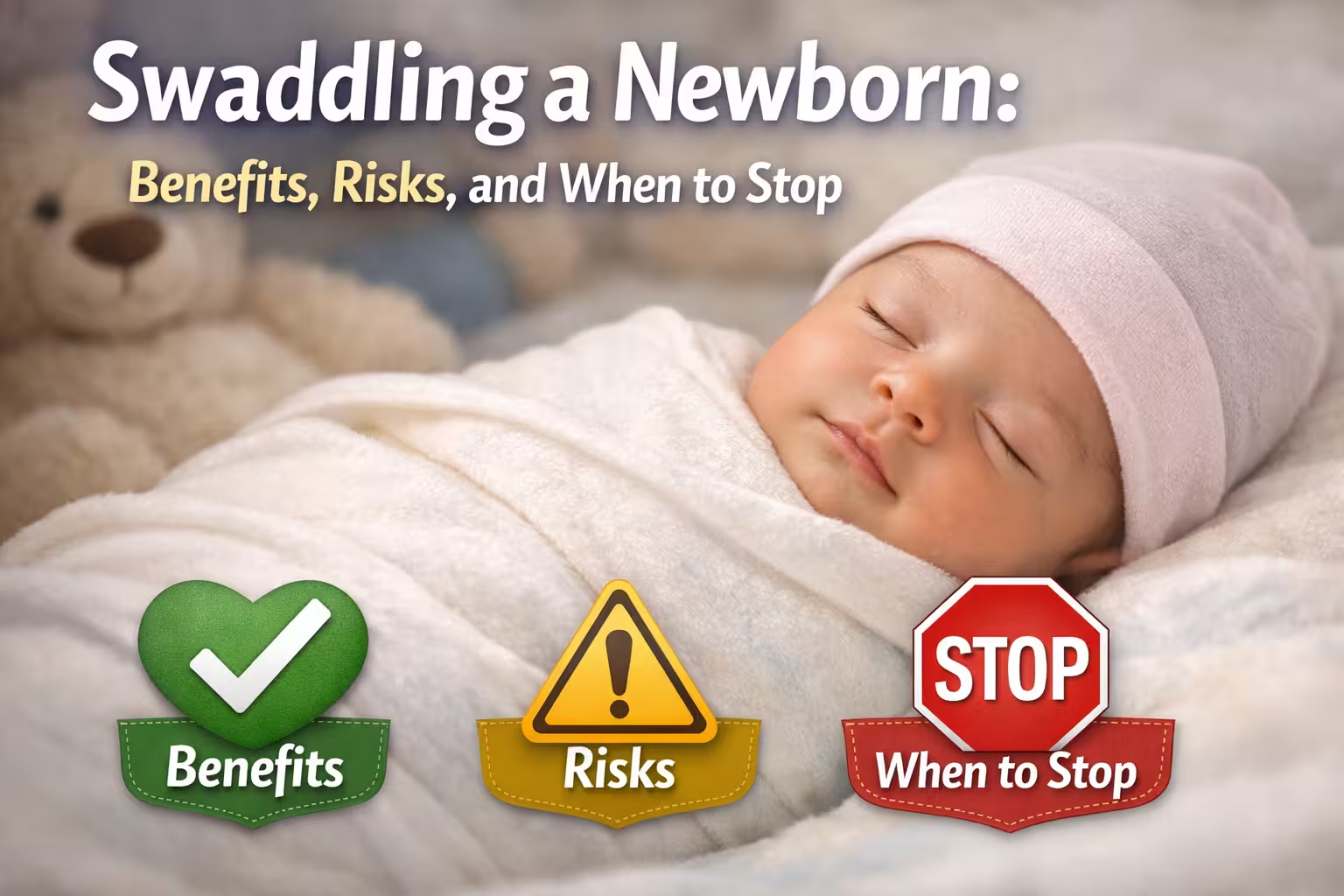
Swaddling can feel like a “magic trick” in the newborn phase: wrap your baby snugly, the startle reflex calms down, and suddenly everyone gets a little more rest. But swaddling isn’t automatically safe just because it’s traditional—or popular on social media. The safest approach is to understand why swaddling works, when it’s helpful, what can go wrong, and exactly when to stop.
This guide is written in a practical, real-world way—based on the same kind of safe-sleep and newborn-care guidance pediatricians commonly give to new parents.
What is swaddling?
Swaddling means wrapping a newborn in a thin blanket (or using a swaddle product) so the arms and upper body feel secure while the hips and legs can still move. Think of it as giving your baby a “contained” feeling similar to being held—without actually holding them.
Swaddling is mainly used in the first weeks of life when babies have a strong Moro (startle) reflex—their arms fling out suddenly, which can wake them.
Why do parents swaddle?
1 It can reduce the startle reflex
Newborns can startle many times in a single nap. A well-done swaddle keeps the arms from flinging outward and may help babies stay asleep longer.
2 It can help some babies settle faster
Many babies calm down when they feel contained. Swaddling can be especially helpful in the first 4–8 weeks, when babies are adjusting to the outside world.
3 It can support a consistent sleep routine
Swaddling can become a clear sleep cue: “wrap → feed → burp → sleep.” A predictable routine can reduce overtiredness.
4 It can provide warmth without loose blankets
Loose blankets in a sleep space are unsafe. Swaddling (done correctly) can keep a baby warm without adding extra bedding.
Important note: Swaddling is not required. Many babies sleep well without it. If your baby settles easily with rocking, feeding, a pacifier, or a sleep sack, you may not need swaddling at all.
Is swaddling safe for newborn sleep?
Swaddling can be safe only when all safety rules are followed and only until your baby shows signs of rolling.
The biggest swaddling safety issues are:
- A swaddled baby rolling onto the stomach (higher risk of suffocation)
- A swaddle blanket becoming loose (fabric near the face)
- Overheating
- Tight leg wrapping (hip problems)
If you feel unsure, ask your pediatrician or a qualified nurse to show you once in person. A 2-minute demonstration can prevent common mistakes.
Safe swaddling rules pediatricians emphasize
1 Always place a swaddled baby on the back
A swaddled baby should be placed flat on their back for every sleep—night sleep and naps.
2 Use a firm, flat sleep surface
Crib, bassinet, or cot with a firm mattress and fitted sheet. Keep the sleep space clear—no pillows, quilts, soft toys, or loose blankets.
3 Stop swaddling at the first signs of rolling
This is the most important “when to stop” rule. Some babies begin attempting to roll surprisingly early.
4 Keep the wrap snug around the chest, but not tight
A safe swaddle is snug enough that it won’t unravel, but loose enough that your baby can breathe comfortably.
Quick check: You should be able to slide two fingers between the swaddle and your baby’s chest.
5 Keep the hips and knees free to move (hip-healthy swaddling)
The legs should be able to bend up and out. Avoid wrapping the legs straight down and tight.
Why this matters: Swaddling with hips and knees forced straight can increase the risk of developmental dysplasia of the hip (DDH).
6 Avoid overheating
Newborns overheat easily.
Practical signs your baby may be too warm:
- Sweaty hair or damp neck
- Hot chest/back
- Flushed skin
- Fast breathing
Rule of thumb: Dress your baby in one light layer more than an adult would wear comfortably in the same room.
7 Don’t use weighted swaddles or weighted sleep products
Weighted swaddles, weighted sleep sacks, or weighted blankets are not recommended for infant sleep.
8 Don’t swaddle when bed-sharing
If you bed-share (even occasionally), do not swaddle. A swaddled baby can’t use arms to reposition and is at higher risk if an adult blanket or body shifts.
9 Use swaddling only for sleep, not for long awake time
Babies need free movement for development—especially supervised “tummy time” when awake.
Breastfeeding vs Formula — What New Parents Should Know
How to swaddle safely
If you prefer a blanket swaddle, choose a thin, breathable blanket (for example, muslin or light cotton). Avoid thick blankets.
- Lay the blanket in a diamond shape on a flat surface.
- Fold the top corner down (so you have a straight edge).
- Place your baby on the blanket with shoulders just below the top fold.
- Position the arms:
- Many newborns do well with arms down.
- Some babies prefer “hands up” near the face (a looser upper wrap or specific swaddle products can help).
- Bring one side across the body and tuck it under the baby’s back.
- Fold the bottom up, leaving room for hips and knees to bend (do not force legs straight).
- Bring the remaining side across and tuck securely.
Safety check:
- Swaddle stays secure if you gently lift the baby a little (fabric doesn’t loosen toward face)
- Baby can breathe comfortably
- Hips and knees can move
If blanket swaddling feels stressful: a well-designed, correctly sized swaddle sack can be easier and more consistent.
Swaddling and hip dysplasia: what every parent should know
Hip dysplasia risk rises when swaddling forces the legs straight and together. Babies’ hips are still developing, and they need a natural “frog-leg” posture.
Hip-healthy position looks like:
- Hips slightly bent
- Knees slightly bent
- Legs able to move outward
If your baby has a known hip issue, was breech, or is in any hip brace/harness, follow your pediatrician/orthopedic specialist’s instructions—swaddling may need to be modified or avoided.
Swaddling risks
1 Rolling and suffocation risk
A swaddled baby who rolls onto the stomach may not be able to push up or reposition.
How to reduce risk: Stop swaddling at first rolling attempts. Always place baby on the back.
2 Loose blanket near the face
A blanket that loosens can cover the nose/mouth.
How to reduce risk:
- Use a thin blanket
- Keep it snug and secure
- Avoid swaddling too low (fabric should not ride up)
- Consider a well-fitted swaddle sack if blankets loosen often
3 Overheating
Overheating is associated with unsafe sleep environments.
How to reduce risk:
- Use breathable material
- Keep room comfortably cool
- Don’t add hats for sleep indoors
- Check your baby’s chest or back (hands/feet can feel cool normally)
4 Too-tight wrapping around the chest
Very tight swaddling can restrict chest movement.
How to reduce risk: Use the “two-finger chest check.” Watch breathing. If unsure, loosen.
5 Reduced movement if used too long
Swaddling is a short-term tool. Babies need freedom to move arms and legs as they grow.
How to reduce risk: Limit swaddling to sleep only and plan a transition when rolling begins.
When to stop swaddling a baby (the clearest rule)
Stop swaddling as soon as your baby shows signs of trying to roll over.
Many babies begin attempting to roll around 2 months (some earlier, some later). Because it can happen suddenly, don’t wait for a perfect “date” on the calendar.
Signs your baby is getting close to rolling
- Turning onto the side during sleep (even once)
- Lifting legs and rocking body to one side
- Stronger “arching” and twisting
- Pushing up during tummy time and shifting weight
If you notice any of these signs, start transitioning out of the swaddle immediately.
How to transition out of the swaddle
Some babies transition easily; others need a few nights to adjust. Both are normal.
Option A: One arm out for 2–3 nights
- Start with one arm out (often the dominant arm)
- Then switch to both arms out
- Then move to a sleep sack
Option B: Both arms out (but keep the chest snug)
Many babies sleep better if the chest still feels “hugged” while arms are free.
Option C: Cold turkey
For some babies, gradual steps create confusion and they do better with a clean switch.
What helps during transition
- Extra burping after feeds
- A consistent bedtime routine
- More daytime tummy time (supports motor development)
- A pacifier (if your baby accepts it)
- Slightly earlier bedtime to avoid overtiredness
Swaddle vs sleep sack: what’s better?
- Swaddle: Best for early newborn phase, mainly to reduce startle reflex.
- Sleep sack (wearable blanket): Best once baby is older and especially once rolling begins. It keeps warmth without restricting arms.
If you want one simple path: swaddle for the early weeks → transition to sleep sack.
FAQ
“How long can you swaddle a newborn at night?”
You can swaddle during night sleep and naps only while your baby is not rolling and only if you are following safe-sleep practices. Once rolling starts, swaddling must stop.
“Can I swaddle my newborn for naps too?”
Yes, if you swaddle at all, it should be consistent for naps and night sleep. The same safety rules apply.
“Should newborns sleep with arms up or down in a swaddle?”
Both can be okay. Some babies settle better with arms down; others prefer hands near the face. The key is that the swaddle must be secure and not restrict breathing.
“Can I swaddle my baby after feeding?”
Yes, but make sure your baby is burped and comfortable first. If your baby spits up frequently, keep them upright briefly after feeds (your pediatrician can guide you based on reflux severity).
“Is swaddling bad for breastfeeding?”
Swaddling itself doesn’t harm breastfeeding, but many babies feed better with arms free. A practical approach is:
- Unswaddle for feeding
- Re-swaddle only for sleep if needed
“My baby hates swaddling—should I force it?”
No. Some babies strongly dislike feeling contained. If your baby fights the swaddle, escapes repeatedly, or becomes more upset, skip it and try alternatives like:
- Sleep sack (arms free)
- Gentle rocking
- White noise
- Pacifier (if appropriate)
Myths vs reality (what the community says vs what’s true)
| Myth | Reality |
|---|---|
| “Swaddling prevents SIDS.” | Swaddling does not prevent SIDS. Safe sleep practices matter most (back sleeping, firm surface, no loose bedding). |
| “A tight swaddle makes the baby’s legs straight and strong.” | Forcing legs straight can raise hip dysplasia risk. Legs should bend and move freely. |
| “If a baby startles, swaddling is the only solution.” | Many babies settle with other soothing methods. Swaddling is optional. |
| “Swaddling is safe until 6 months if the baby sleeps well.” | Swaddling becomes unsafe once rolling begins (often around 2 months). |
| “A baby who wakes more is ‘undisciplined’—swaddling will fix it.” | Night waking is normal. Swaddling may reduce startle waking early on, but it won’t remove normal newborn waking patterns. |
| “Thicker blankets help babies sleep deeper.” | Thick layers increase overheating and loose-bedding risk. Use thin, breathable materials and safe sleep clothing. |
When you should avoid swaddling
- Baby has a fever or is sick and warm
- You are bed-sharing
- Baby has hip problems or is in a hip harness/brace
- Baby is rolling or trying to roll
- Baby repeatedly breaks free and the blanket loosens near the face
- Baby seems overheated or has heat rash
If your baby was premature, had a NICU stay, or has any breathing/neuromuscular condition, ask your pediatrician for personalized guidance.
Red flags: call your pediatrician if you notice
- Breathing looks difficult, very fast, or noisy during sleep
- Blue or gray lips/face (emergency)
- Repeated overheating (sweaty, hot to touch) despite light clothing
- Persistent one-sided hip tightness or clicking (mention at routine checkups)
- Your baby seems unusually floppy, excessively sleepy, or hard to wake
Key takeaways for safe, confident swaddling
- Swaddling can help in the early newborn weeks by calming the startle reflex.
- Safety comes first: back sleeping, firm flat surface, no loose bedding, avoid overheating.
- Keep the chest snug but not tight; keep hips and knees free to move.
- Stop swaddling immediately when your baby shows signs of rolling (often around 2 months).
- Transition to an arms-free option like a sleep sack once rolling begins.
References
- American Academy of Pediatrics (HealthyChildren.org) — “Swaddling: Is it Safe for Your Baby?”: https://www.healthychildren.org/English/ages-stages/baby/diapers-clothing/Pages/Swaddling-Is-it-Safe.aspx
- American Academy of Pediatrics (HealthyChildren.org) — “How to Keep Your Sleeping Baby Safe: AAP Policy Explained”: https://www.healthychildren.org/English/ages-stages/baby/sleep/Pages/a-parents-guide-to-safe-sleep.aspx
- American Academy of Pediatrics — “Sleep-Related Infant Deaths: Updated 2022 Recommendations for Reducing Infant Deaths in the Sleep Environment” (Pediatrics): https://publications.aap.org/pediatrics/article/150/1/e2022057990/188304/Sleep-Related-Infant-Deaths-Updated-2022
- Centers for Disease Control and Prevention (CDC) — “Helping Babies Sleep Safely”: https://www.cdc.gov/reproductivehealth/features/babies-sleep.html
- Centers for Disease Control and Prevention (CDC) — “Providing Care for Babies to Sleep Safely (SUID/SIDS)”: https://www.cdc.gov/sudden-infant-death/sleep-safely/index.html
- International Hip Dysplasia Institute — “Hip-Healthy Swaddling”: https://hipdysplasia.org/infant-child/hip-healthy-swaddling/
- NHS — “Safe Sleep Advice for Babies (Best Start in Life)”: https://www.nhs.uk/best-start-in-life/baby/baby-basics/newborn-and-baby-sleeping-advice-for-parents/safe-sleep-advice-for-babies/