Physical Address
304 North Cardinal St.
Dorchester Center, MA 02124
Physical Address
304 North Cardinal St.
Dorchester Center, MA 02124

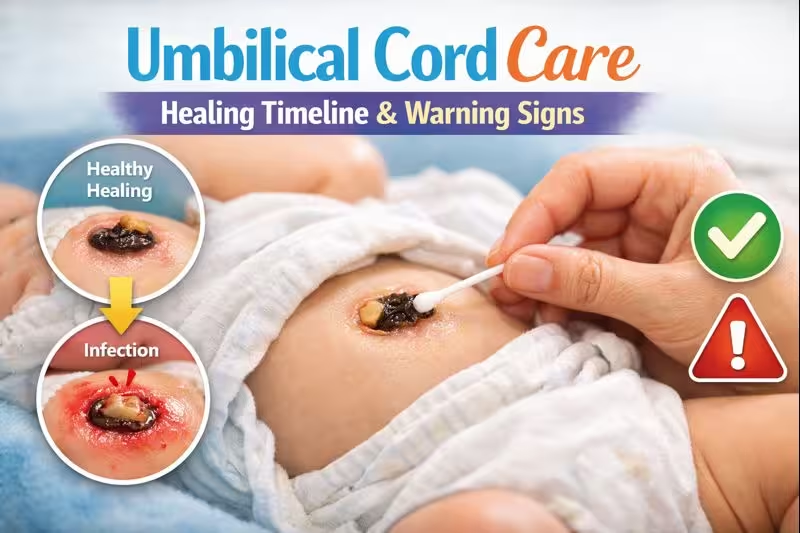
Bringing a newborn home comes with a long list of “firsts”—first feeding, first bath, first diaper change. One of the most common early worries is the small piece of tissue attached to your baby’s belly button: the umbilical cord stump. The good news is that, for most babies, the stump dries, shrivels, and falls off on its own with simple, gentle care.
This guide shares pediatrician-style, real‑world advice on what “normal healing” looks like, how long it usually takes, how to care for it day by day, and what warning signs mean you should call your baby’s doctor.
During pregnancy, the umbilical cord carries oxygen and nutrients from the placenta to your baby. After birth, the cord is clamped and cut, leaving a short stump on the belly. Because the stump is “dead tissue” drying out, it can attract bacteria if it stays wet, is covered tightly, or has substances applied to it.
Pediatricians generally recommend “clean, dry cord care” for most healthy newborns: keep the area clean, keep it dry, and let it fall off naturally.
Every baby is a little different, but most cord stumps fall off somewhere between 1 and 3 weeks after birth.
Important: If your baby was premature, had a NICU stay, received antibiotics, or has certain medical conditions, stump separation can be delayed. Your pediatrician will guide you in those cases.
Newborn Bath Routine : When to Bath and How to Do It Safely
Before touching the stump or the skin around it, wash your hands with soap and water. This is one of the simplest ways to reduce infection risk.
In normal daily life, you don’t need to “do” much.
If the stump gets dirty (for example, pee/poop touches it):
Dryness helps the stump shrivel and fall off.
Many pediatric teams still suggest sponge baths until the stump falls off, simply because it’s easier to keep the stump dry.
If you do give a tub bath:
If your hospital or pediatrician gave a specific instruction, follow that plan.
In many communities, parents are told to apply spirit/alcohol, betadine, powders, oils, or home remedies “to make it dry faster.” For most healthy newborns, pediatric guidance is:
In some higher‑risk settings (for example, home births in areas with high newborn infection risk), health programs may recommend chlorhexidine for the first week. Use this only if your healthcare provider specifically advises it.
A small spot of blood when the stump is about to fall off—or just after it falls off—can be normal.
Not normal:
A mild smell can happen as tissue dries. But a strong, foul smell—especially with discharge—can be a warning sign.
A small amount of clear or yellowish moisture right after the stump falls off may be normal for a short time.
Not normal:
This may be an umbilical granuloma—a small overgrowth of healing tissue. It’s usually not dangerous, but it often needs treatment by a doctor (commonly a quick in‑clinic procedure). Don’t try home remedies.
This is often an umbilical hernia, which is common and usually painless. Most close on their own over time, but your pediatrician should check it during routine visits—especially if it becomes hard, tender, discolored, or your baby is vomiting.
Umbilical stump infections can become serious quickly in newborns. Contact your pediatrician urgently (or seek emergency care) if you notice any of the following:
If your baby is less than 28 days old and you’re unsure, it’s always safer to call. Newborns can deteriorate faster than older children.
Reality: These substances can trap moisture and introduce germs. Dry cord care usually helps the stump fall off safely.
Reality: Routine alcohol cleaning is not recommended for most babies today. It can irritate the skin and may delay natural healing. Use only what your pediatrician advises.
Reality: Tight covering reduces airflow and can cause friction. Loose clothing is safer.
Reality: Never pull the stump. Early removal can cause bleeding and increase infection risk.
Reality: The key issue is prolonged soaking and leaving the area wet. If the area is kept dry after bathing, most babies heal normally. Follow your pediatrician’s advice for your baby.
Most babies’ stumps fall off between 1 and 3 weeks. A shorter or longer timeline can happen, especially if your baby was premature or received antibiotics.
Avoid applying ointments or creams directly to the stump unless your doctor tells you to. If the surrounding skin is irritated from diapers, ask your pediatrician for a safe approach that doesn’t coat the stump.
A tiny spot of blood can be normal. Bleeding that doesn’t stop or keeps happening needs medical advice.
Omphalitis is an infection of the umbilical stump and surrounding skin. It can become serious quickly in newborns and needs prompt medical treatment.
Call your pediatrician. Most causes are minor, but the doctor may check for infection, skin irritation, or (rarely) immune‑related issues.
For most newborns, umbilical cord care is simple: keep it clean, keep it dry, and let it fall off naturally. Trust your instincts—if something looks worse instead of better, if your baby seems unwell, or if you see signs of infection, call your pediatrician promptly.
American Academy of Pediatrics (HealthyChildren.org) — Umbilical Cord Care in Newborns
https://www.healthychildren.org/English/ages-stages/baby/bathing-skin-care/Pages/Umbilical-Cord-Care.aspx
Mayo Clinic — Umbilical cord care: Do’s and don’ts for parents
https://www.mayoclinic.org/healthy-lifestyle/infant-and-toddler-health/in-depth/umbilical-cord/art-20048250
NHS (UK) — Getting to know your newborn (Umbilical cord care section)
https://www.nhs.uk/pregnancy/labour-and-birth/getting-to-know-your-newborn/
Cleveland Clinic — Omphalitis (Infected Umbilical Cord): Symptoms & Treatment
https://my.clevelandclinic.org/health/diseases/omphalitis
HSE (Ireland) — Umbilical cord stump: care and when to get help
https://www2.hse.ie/babies-children/parenting-advice/caring-for-a-new-baby/umbilical-cord-stump/
NHS Neonatal Networks (TVW) — Umbilical Cord Care Guideline (PDF)
https://neonatalnetworkssoutheast.nhs.uk/wp-content/uploads/2023/10/TVW-Umbilical-Cord-Care-Guideline.-V4-ratified-June-2023.pdf
NIH/NCBI Bookshelf (StatPearls) — Omphalitis
https://www.ncbi.nlm.nih.gov/books/NBK513338/