
The Government of India has revolutionized the electric vehicle (EV) ecosystem with the introduction of the PM E-DRIVE (PM Electric Drive Revolution in Innovative Vehicle Enhancement) Scheme. Designed as the official successor to the FAME II program, this initiative aims to accelerate the mass adoption of electric mobility across the country. Whether you are a daily commuter looking to buy an electric scooter, a commercial driver upgrading to an e-rickshaw, or a fleet operator, this scheme directly lowers the upfront cost of purchasing an electric vehicle.
Table of Contents
This comprehensive guide covers everything you need to know about the PM E-DRIVE EV subsidy eligibility, the new Aadhaar e-voucher system, and how to successfully claim your electric vehicle subsidy.
1. Overview of the PM E-DRIVE Scheme
The PM E-DRIVE Scheme is a central government initiative aimed at driving India towards a greener future by making electric vehicles more affordable and accessible.
- Purpose of the Scheme: To boost the domestic manufacturing of EVs, reduce India’s reliance on fossil fuel imports, and significantly cut down environmental pollution by subsidizing the purchase of EVs and building a robust public charging network.
- Launched By: Ministry of Heavy Industries (MHI), Government of India.
- Launch Date: October 1, 2024.
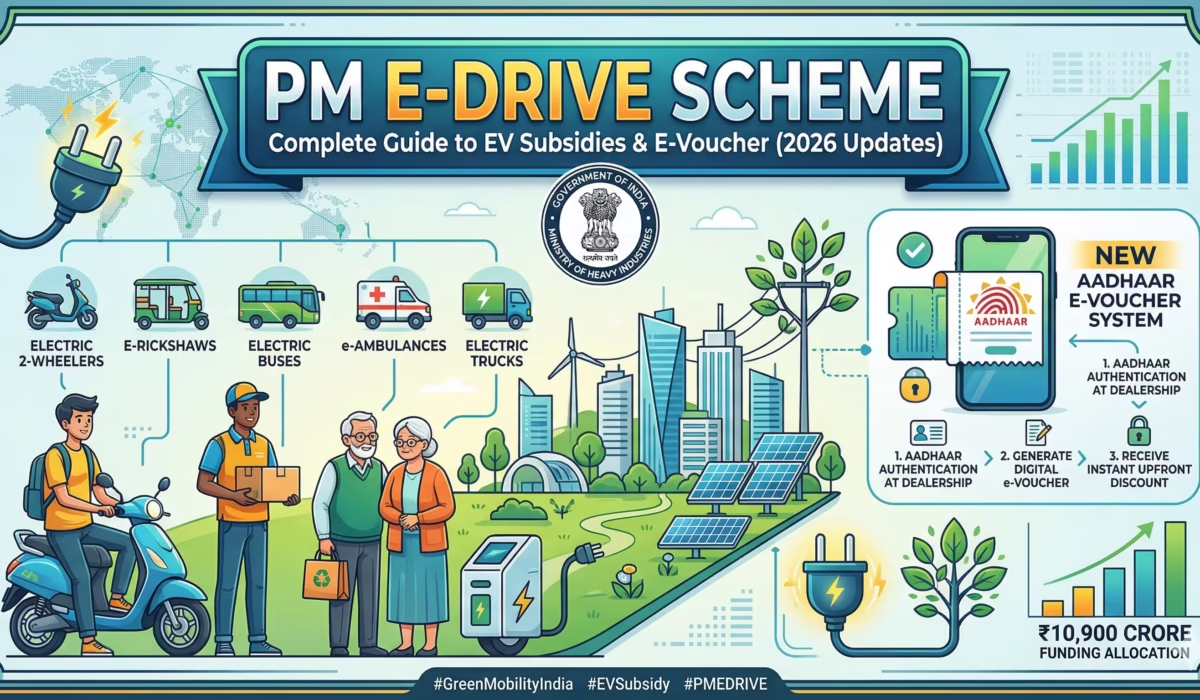
- Financial Outlay: A massive budget of ₹10,900 crore has been allocated to fund vehicle subsidies, public transportation upgrades, and charging infrastructure.
- Target Beneficiaries: Individual EV buyers (two-wheelers), commercial drivers (three-wheelers/e-rickshaws), public transport agencies (e-buses), logistics companies (e-trucks), and charging infrastructure providers.
2. Key Highlights of the PM E-DRIVE Scheme
Here is a quick summary of the scheme’s core components:
| Feature | Details |
|---|---|
| Scheme Name | PM Electric Drive Revolution in Innovative Vehicle Enhancement |
| Scheme Type | Central Government Subsidy / Demand Incentive |
| Total Budget | ₹10,900 Crore |
| Valid Duration | October 1, 2024 – March 31, 2028 (Category-specific deadlines apply) |
| Eligible Vehicles | e-2Ws, e-3Ws (e-rickshaws/e-carts), e-Ambulances, e-Trucks, e-Buses |
| Claim Mechanism | Aadhaar-authenticated E-Voucher System |
| Official Portal | pmedrive.heavyindustries.gov.in |
3. Objectives of the Scheme
The Ministry of Heavy Industries introduced this scheme to build upon the foundation laid by previous initiatives. Understanding PM E-DRIVE vs FAME II is simple: while FAME II kickstarted the EV revolution, PM E-DRIVE focuses heavily on infrastructure, commercial logistics (trucks/ambulances), and a digitized, fraud-free subsidy delivery system.
The primary objectives include:
- Promoting Mass EV Adoption: Making EVs price-competitive with traditional petrol and diesel vehicles.
- Establishing Fast-Charging Infrastructure: Alleviating “range anxiety” by installing over 72,300 public chargers across highways and major cities.
- Environmental Impact: Reducing carbon footprints to align with India’s Net-Zero 2070 target.
- Supporting Public Transport: Transitioning heavy-polluting city buses to electric mobility.
4. Benefits of the PM E-DRIVE Scheme
The PM E-DRIVE benefits extend across multiple sectors of the automotive industry. Here is what buyers and businesses stand to gain:
- Upfront Demand Incentives (Subsidies): Buyers receive a direct discount on the ex-showroom price of eligible electric two-wheelers and three-wheelers.
- Public Fast-Charging Network: ₹2,000 crore is allocated to install 22,100 fast chargers for e-4Ws, 48,400 chargers for e-2Ws/3Ws, and 1,800 high-power chargers for e-buses.
- Grants for Capital Assets: ₹4,391 crore is earmarked to help State Transport Undertakings (STUs) procure 14,028 e-buses for public transport.
- Support for Essential Services: ₹500 crore is dedicated exclusively to deploying e-ambulances, while another ₹500 crore supports the transition to e-trucks (linked to scrapping old polluting trucks).
5. PM E-DRIVE EV Subsidy Eligibility Criteria
Not every electric vehicle qualifies for a discount. To ensure you receive the benefit, you must meet the following eligibility conditions:
- Battery Requirement: The vehicle must be equipped with an advanced battery (lead-acid batteries are strictly excluded).
- Price Caps: To prevent subsidies from being used on luxury vehicles, the maximum ex-factory price is capped at ₹1.5 lakh for electric two-wheelers and ₹2.5 lakh for electric three-wheelers.
- Registration: The vehicle must be registered as a “Motor Vehicle” under the Central Motor Vehicle Rules (CMVR).
- One Subsidy Per Person: Individual buyers can only claim the subsidy for one vehicle per category. This is strictly monitored through your Aadhaar card.
- OEM Approval: The vehicle manufacturer (OEM) and the specific vehicle model must be certified and registered on the official PM E-DRIVE portal.
6. Required Documents for Buyers
To process your subsidy smoothly at the dealership, ensure you have the following documents ready:
- Aadhaar Card: Mandatory for identity verification and to ensure the “one subsidy per person” rule.
- Active Mobile Number: Must be linked to your Aadhaar card to receive OTPs and the e-voucher download link.
- Selfie/Photograph: Taken at the dealership during the verification process.
- PAN Card: Often required by dealerships for financial verification and invoicing.
7. How to Avail Subsidies under the PM E-DRIVE Scheme
The government has completely digitized the subsidy claim process to make it transparent and consumer-friendly. If you are wondering how to claim electric vehicle subsidy, the process is handled seamlessly at the point of sale using an Aadhaar e-voucher for EV.
Here is the step-by-step process:
- Choose an Eligible EV: Visit a certified dealership and select a vehicle model approved under the scheme.
- Aadhaar Authentication: The dealer will perform an Aadhaar-based e-KYC (using facial recognition or OTP) through the official PM E-DRIVE app. Note: As of 2026, Aadhaar authentication is strictly mandatory.
- E-Voucher Generation: Once your identity is verified and the vehicle is registered with the RTO, the PM E-DRIVE portal generates a unique e-voucher.
- Receive the Link: A download link for the e-voucher is sent instantly via SMS to your registered mobile number.
- Digital Signature: You must digitally review and sign the e-voucher via the link provided, and return it to the dealer. The dealer countersigns it and uploads it to the portal.
- Instant Discount Applied: The dealer applies the subsidy amount directly to your final invoice. You pay the reduced upfront price, and the government later reimburses the manufacturer (OEM).
8. Claim Status / Tracking Process
As a buyer, you do not need to track the subsidy reimbursement yourself, because the discount is given to you upfront on your invoice.
However, dealerships and OEMs track the reimbursement status directly through their dedicated login on the PM E-DRIVE portal. Once the signed e-voucher and customer selfie are uploaded alongside the approved Registration Certificate (RC), the Ministry of Heavy Industries processes the claim and transfers the funds to the manufacturer.
9. Important Dates and Timelines
- Scheme Launch Date: October 1, 2024.
- Extended Terminal Date for e-2Ws: July 31, 2026 (Revised from March 2026).
- Extended Terminal Date for e-3Ws (e-rickshaws/e-carts): March 31, 2028.
- L5 Category (High-Speed 3Ws): Closed on December 26, 2025 (Target achieved).
- Note: The scheme is fund-limited. If the allocated budget is exhausted before the terminal dates, the scheme will close early.
10. 2026-Specific Updates (Crucial Latest Information)
If you are planning to apply for the scheme in 2026, you must be aware of these recent critical updates announced by the Ministry of Heavy Industries:
- Aadhaar is Now Mandatory: As of late March 2026, you cannot claim an EV subsidy without Aadhaar authentication. This was implemented to stop fraudulent claims and align the scheme with Direct Benefit Transfer (DBT) frameworks.
- Subsidies Slashed for Two-Wheelers: Effective April 1, 2025, the incentive rate for electric two-wheelers was reduced to ₹2,500 per kWh, with a maximum cap of ₹5,000 per vehicle (down from the earlier ₹10,000 cap).
- Subsidies Slashed for Three-Wheelers: The incentive is now capped at ₹12,500 per vehicle for eligible e-rickshaws and e-carts.
- Extension of Deadlines: To ensure remaining funds are utilized, the government extended the e-2W subsidy window until July 31, 2026. Electric rickshaws and carts will continue to receive support until March 31, 2028.
- Budget Shift: With EV two-wheelers nearing cost parity with petrol vehicles, the ₹1,500 crore allocation in the FY27 Union Budget is heavily pivoting toward funding charging infrastructure and electric trucks.
11. Helpline and Official Contact Details
For the most accurate and up-to-date information, to check eligible vehicle models, or for OEM registration, refer to the official government resources:
- Official Portal: pmedrive.heavyindustries.gov.in
- Ministry Website: heavyindustries.gov.in
- Operating Ministry: Ministry of Heavy Industries (MHI), Udyog Bhawan, New Delhi – 110011.
12. Frequently Asked Questions (FAQs)
Q1: How do I apply for the PM E-DRIVE Scheme online? You do not need to individually apply online for the vehicle subsidy. When you search for “PM E-DRIVE Scheme apply online,” know that the process happens directly at the dealership. The dealer will log into the PM E-DRIVE portal, verify your Aadhaar, and generate the e-voucher to give you an upfront discount.
Q2: Is PM E-DRIVE different from FAME II? Yes. PM E-DRIVE is the official successor to the FAME II scheme. While FAME II was instrumental in early EV adoption, PM E-DRIVE brings a highly secure Aadhaar e-voucher system to prevent fraud, introduces funding for e-ambulances and e-trucks, and heavily prioritizes the rollout of public charging stations.
Q3: Can I get a subsidy on an electric car (e-4W) under PM E-DRIVE? No. The PM E-DRIVE scheme does not provide direct purchase subsidies to private buyers of electric cars (e-4Ws). The focus for 4-wheelers is entirely on building public charging infrastructure to support them. Demand incentives are strictly for 2-wheelers, 3-wheelers, buses, trucks, and ambulances.
Q4: How do I get the Aadhaar e-voucher for EV? At the time of purchasing your electric two-wheeler or three-wheeler, the dealer will process your Aadhaar KYC. Once approved, you will receive an SMS containing a link to download, review, and digitally sign your e-voucher.
Q5: What happens if I don’t have an Aadhaar card? As per the March 2026 mandate, Aadhaar is compulsory. However, if you have applied for one but haven’t received it yet, you can submit your Aadhaar Enrolment Acknowledgement slip along with an alternative photo ID (like a Voter ID or Passport) to process your claim.
Q6: Can I buy two electric scooters and get the subsidy on both? No. The PM E-DRIVE EV subsidy eligibility strictly limits the benefit to one vehicle per individual for each category. Your Aadhaar number will block any duplicate attempts to claim a second subsidy for another two-wheeler.