
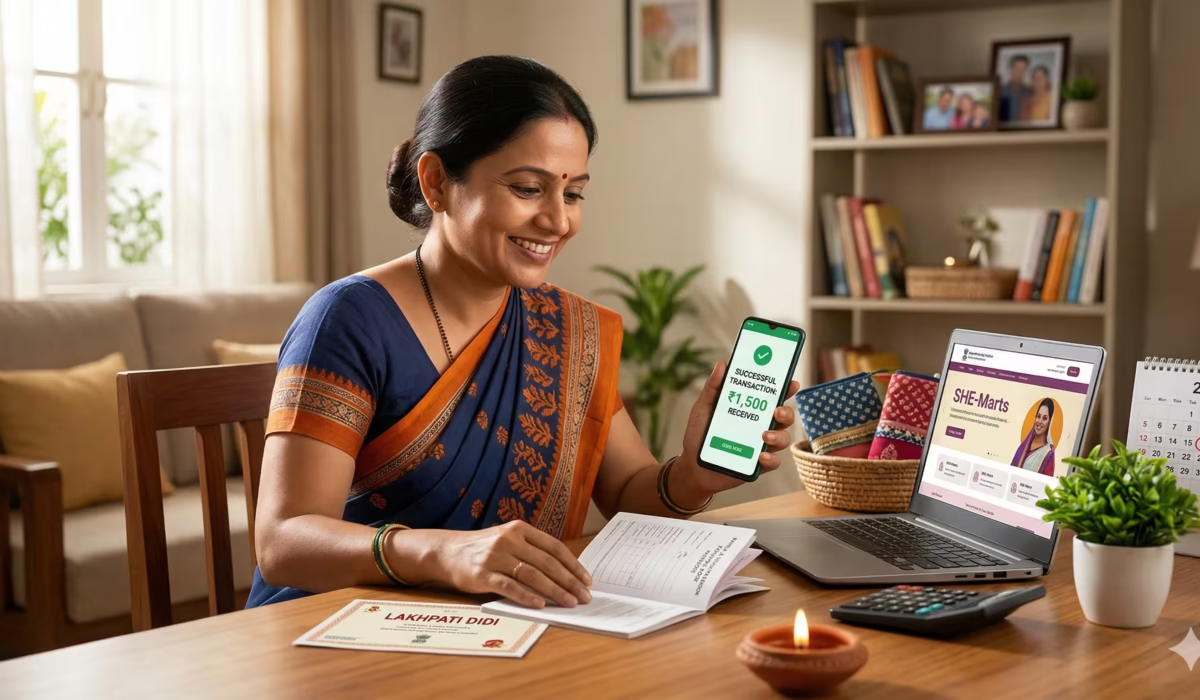
Homemakers are the backbone of the Indian family system, yet their immense contribution to the household economy often goes unrecognized in formal financial frameworks. Recognizing this gap, both the Central and State governments have launched a variety of initiatives designed to offer financial independence, health security, and entrepreneurial support. This Government Schemes for Housewives list encompasses initiatives that provide direct cash transfers, subsidized loans, high-interest savings, and skill development opportunities.
Understanding the eligibility and benefits of these programs is the first step toward securing your future. Whether you are looking for financial assistance for stay-at-home moms or aiming to start a micro-enterprise from the comfort of your home, exploring the best government schemes for homemakers can empower you to become socially and economically self-reliant.
Table of Contents
Top Government Schemes for Housewives : Detailed List
Here is a structured breakdown of the most impactful and relevant schemes currently available for homemakers across India.
1. Mahila Samman Savings Certificate (MSSC)
- Overview: A secure, small savings scheme designed exclusively for women and girls, encouraging a habit of saving while offering risk-free, high-yield returns on investments.
- Key benefits: Offers a fixed interest rate of 7.5% per annum. Women can deposit a maximum of ₹2 lakhs for a 2-year tenure. Partial withdrawal of up to 40% is allowed after the first year.
- Eligibility: Any adult woman can open an account for herself, or a guardian can open one on behalf of a minor girl. It is ideal for housewives looking for safe investments.
- Launch year / authority: 2023 / Central Government (Ministry of Finance)
2. Pradhan Mantri Ujjwala Yojana (PMUY)
- Overview: A critical health and welfare initiative aimed at safeguarding women from the respiratory hazards of indoor air pollution caused by traditional cooking fuels like firewood and coal.
- Key benefits: Provides a free LPG gas connection to the female head of the household, along with highly subsidized cylinder refills.
- Eligibility: Adult women belonging to Below Poverty Line (BPL) households, SC/ST communities, or other specified vulnerable groups.
- Launch year / authority: 2016 / Central Government (Ministry of Petroleum and Natural Gas)
3. Lakhpati Didi Initiative
- Overview: A flagship rural livelihood program focused on skill development and financial empowerment, aiming to help rural women earn a sustainable income of at least ₹1 lakh per year.
- Key benefits: Provides structured training in diverse areas like tailoring, LED bulb making, drone piloting (NaMo Drone Didi), and dairy farming. It also facilitates easy access to micro-loans to start small home-based businesses.
- Eligibility: Women who are active members of registered Self-Help Groups (SHGs). It is highly beneficial for rural homemakers transitioning into micro-entrepreneurship.
- Launch year / authority: 2023 / Central Government (Ministry of Rural Development)
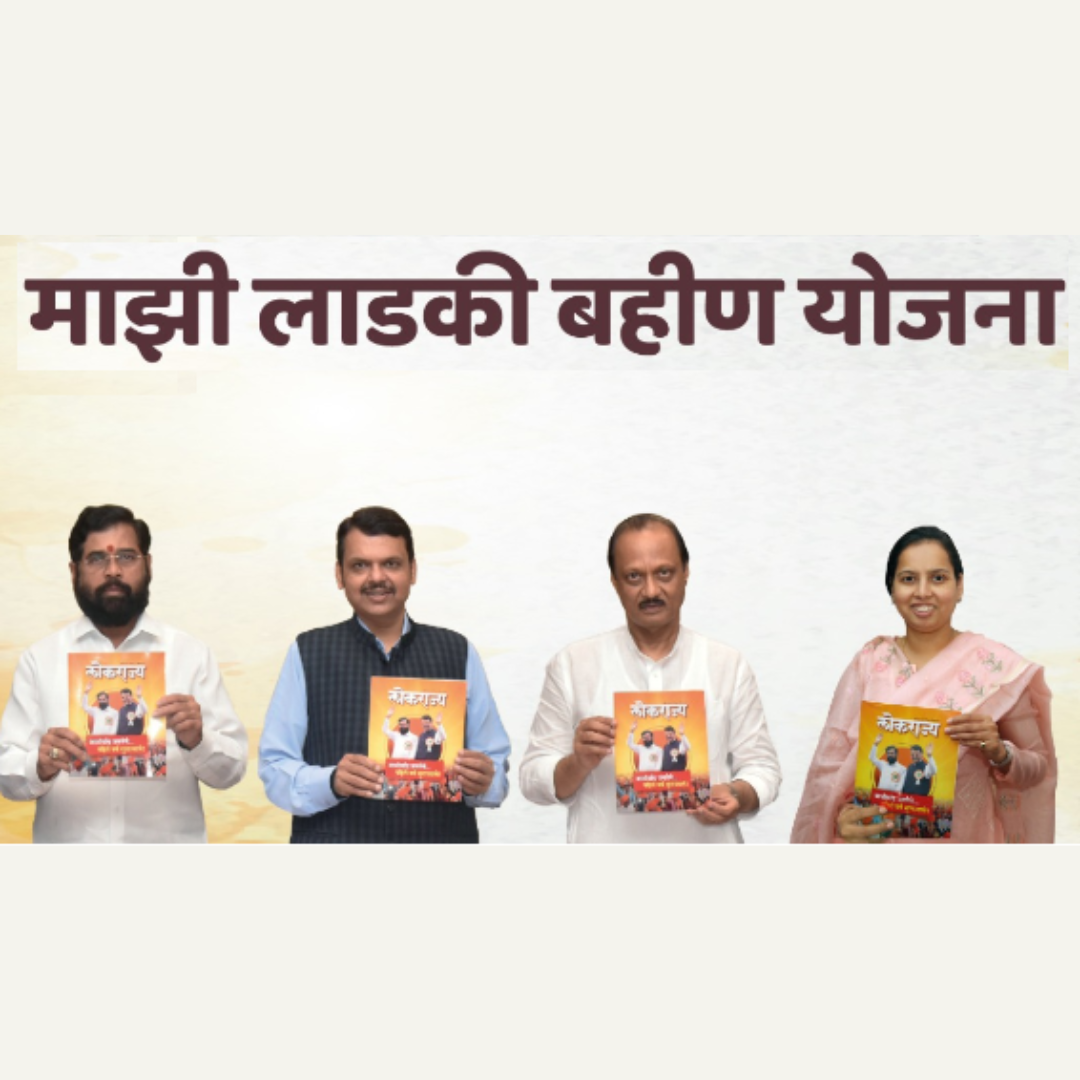
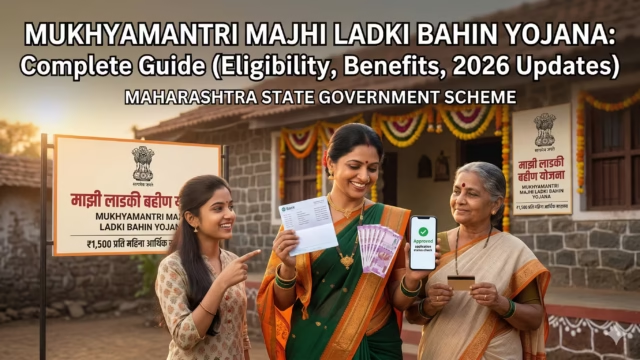
4. Mukhyamantri Majhi Ladki Bahin Yojana
- Overview: A direct cash transfer scheme launched in Maharashtra to ensure the economic independence, health, and nutritional security of women managing households.
- Key benefits: Eligible women receive a direct financial assistance of ₹1,500 every month, credited straight into their Aadhaar-linked bank accounts via Direct Benefit Transfer (DBT).
- Eligibility: Married, widowed, divorced, or destitute women in Maharashtra aged 21 to 65 years, belonging to families with an annual income of less than ₹2.50 lakh.
- Launch year / authority: 2024 / State Government of Maharashtra (Women and Child Development Department)
- To Know More about Scheme Click Here.
5. Pradhan Mantri Matru Vandana Yojana (PMMVY)
- Overview: A maternity benefit program designed to provide adequate rest and proper nutrition to pregnant women and lactating mothers, partially compensating them for wage loss during childbirth.
- Key benefits: Provides a direct cash incentive of ₹5,000 for the birth of the first child. An additional cash incentive is provided if the second child is a girl, promoting the welfare of the girl child.
- Eligibility: Pregnant women and lactating mothers who are not in regular employment under the Central/State Government or PSUs. It is highly suitable for stay-at-home mothers.
- Launch year / authority: 2017 / Central Government (Ministry of Women and Child Development)
6. Stand-Up India Scheme
- Overview: A financial empowerment initiative designed to promote grassroots entrepreneurship among women by easing the process of acquiring substantial business capital.
- Key benefits: Facilitates bank loans ranging from ₹10 lakh to ₹1 crore for women setting up a new (greenfield) enterprise in the manufacturing, services, or trading sectors.
- Eligibility: Any adult woman (above 18 years of age) looking to start a new business. It is perfect for housewives planning to scale a home-based passion into a full-fledged registered business.
- Launch year / authority: 2016 / Central Government (Ministry of Finance)
How to Choose the Right Scheme
Navigating through the various government schemes can be overwhelming. To ensure you apply for the right one, consider these key factors:
- Identify Your Goal: Are you looking for a safe place to park your savings (e.g., Mahila Samman Savings Certificate), direct income support (e.g., Ladki Bahin Yojana), or funding to start a home business (e.g., Stand-Up India)? Choose based on your immediate need.
- Central vs. State Schemes: While Central schemes (like PMUY) apply nationwide, State schemes are exclusive to residents of that specific state. Always check your state government’s local portal for unique localized benefits.
- Check Income Limits: Many welfare schemes are targeted at low-to-middle-income households. Ensure your family’s annual income falls within the prescribed limits (often below ₹2.5 lakh to ₹8 lakh, depending on the scheme).
- Keep Documentation Ready: The success of any application relies on proper documentation. Always keep an updated Aadhaar card, a valid mobile number linked to your Aadhaar, an active bank account (for DBT), a domicile certificate, and a family income certificate ready.
2026-Specific Updates Section
The landscape of women’s welfare has seen massive boosts recently, making the latest schemes for housewives 2026 more robust than ever.
- Massive Budget Allocation: The Union Budget 2026–27 has allocated a historic ₹5.01 lakh crore specifically for the welfare of women and girls, reflecting a nearly 11.5% increase from the previous year.
- Introduction of SHE-Marts: A major announcement in 2026 is the creation of Self-Help Entrepreneur (SHE) Marts. These community-owned retail outlets will be established in every district to provide homemakers and SHG members a dedicated marketplace to sell their homemade products, solving the problem of market linkage.
- Lakhpati Didi Target Expanded: Following massive success, the government has revised the target for the Lakhpati Didi initiative, now aiming to create 6 crore “Lakhpati Didis” across India by March 2029.
- State-Level Extensions: In Maharashtra, the heavily popular Mukhyamantri Majhi Ladki Bahin Yojana continues its steady disbursements in 2026, with recent updates extending the e-KYC correction deadlines to ensure no eligible homemaker misses out on their ₹1,500 monthly assistance.
FAQs
What are the best government schemes for homemakers to start a business? The Stand-Up India Scheme, Mudra Yojana for Women, and the Lakhpati Didi initiative are excellent choices. They provide easy access to capital, collateral-free micro-loans, and skill training specifically tailored for women launching small enterprises.
Can stay-at-home moms apply for pension schemes? Yes. Stay-at-home mothers can secure their retirement by contributing to the National Pension System (NPS) or the Atal Pension Yojana (APY), provided they meet the age criteria (18-40 years for APY).
Do I need a bank account to receive financial assistance for stay-at-home moms? Absolutely. Almost all modern government schemes, including maternity benefits like PMMVY and state schemes like Ladki Bahin, utilize the Direct Benefit Transfer (DBT) system. This requires an active bank account seeded with your Aadhaar number.
Are there any specific savings schemes just for women? Yes, the Mahila Samman Savings Certificate (MSSC) is a dedicated scheme for women and girls that offers a lucrative 7.5% annual interest rate for a two-year tenure, making it one of the most secure savings vehicles for housewives.
Where can I find the official Government Schemes for Housewives list and apply? You can discover and apply for most central government schemes on the official myScheme portal (myscheme.gov.in). For state-specific schemes, you should visit the respective state government’s Women and Child Development portal or inquire at your local Panchayat or Anganwadi center.