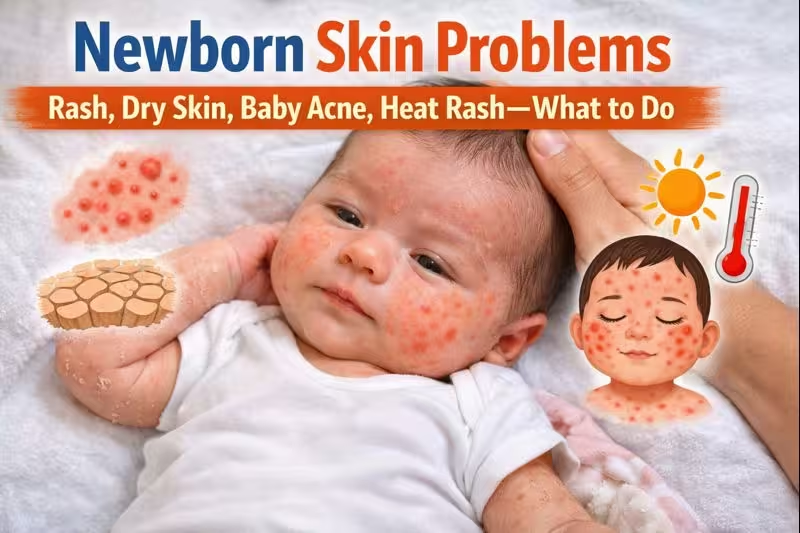
Newborn skin can look “imperfect” even when your baby is perfectly healthy. In the first weeks of life, your baby’s skin is adjusting from a watery, protected environment to air, clothing, diapers, temperature changes, and new germs. That transition can cause rashes, peeling, tiny bumps, redness in skin folds, and dry patches—most of which are common and temporary.
This guide explains the most frequent newborn skin problems parents notice, what you can safely do at home, what to avoid, and when it’s time to call your baby’s pediatrician.
First, check for “red flags”
Most newborn rashes are harmless, but get medical advice urgently if your newborn has any of the following:
- Fever (especially in babies under 3 months)
- Trouble breathing, swelling of the lips/face, or widespread hives
- Purple spots, bruising-like rash, or rash that doesn’t fade when you press a clear glass on it
- Blisters, open sores, or skin that looks burned
- Pus, honey-colored crusting, or rapidly spreading redness (possible infection)
- Your baby seems very sleepy, unusually irritable, feeding poorly, or has fewer wet diapers than usual
If you’re ever unsure, it’s always reasonable to call your pediatrician—newborns can change quickly.
A simple way to think about newborn rashes
Ask three questions:
- Is baby otherwise well? (normal feeding, normal temperature, alertness)
- Is the rash localized or widespread?
- Is the skin intact or broken? (no blisters, oozing, bleeding)
If your baby is well and the skin is intact, most newborn rashes can be managed with gentle care and observation.
What you’re seeing and what it usually means
Tiny white bumps on nose/cheeks (like little pearls)
Likely milia (milk spots) — common, harmless, go away on their own.
Red blotches with small white/yellow “pimple” centers
Often erythema toxicum — very common in the first days, harmless, fades within a week or two.
Small red pimples on cheeks/forehead at 2–4 weeks
Often newborn baby acne — usually clears without treatment.
Small red bumps in skin folds, worse in heat
Often heat rash (miliaria) — cooling and drying helps.
Flaking/peeling skin on hands/feet or body
Often normal newborn peeling — improves as the skin barrier matures.
Bright red rash in diaper area
Often diaper rash — moisture and friction; barrier care helps.
Greasy yellow scales on scalp/eyebrows
Often cradle cap — common and treatable with gentle scalp care.
1 Dry skin & peeling in newborns
Why it happens
Many babies shed the top layer of skin in the first days to weeks after birth. This is especially common if your baby was overdue. Peeling often appears on the hands, feet, ankles, or tummy.
What you can do at home
- Keep baths short (5–10 minutes) with lukewarm water.
- Use plain water for routine bathing, especially in the early weeks.
- If you use a cleanser, choose a mild, fragrance-free baby cleanser and use it sparingly.
- After bathing, pat (don’t rub) the skin dry.
- If the skin looks uncomfortable or very dry, you can apply a thin layer of a fragrance-free ointment or cream (simple “emollient” style products). Ointments are often better than lotions because they seal in moisture.
What to avoid
- Hot water, long baths, or frequent bubble baths (they dry skin).
- Scented lotions, perfumed oils, and “adult” skincare products.
- Scrubbing peeling skin—let it shed naturally.
When to call the pediatrician
- Cracks that bleed, ooze, or look infected
- Dry skin with significant redness, weeping, or itchiness (could be eczema)
- Peeling plus signs of illness (fever, poor feeding)
2 Baby acne (newborn acne)
What it looks like
Small red bumps or tiny pimples, mostly on the cheeks, sometimes the chin and forehead. It often starts around 2–4 weeks of age.
Why it happens
Newborn acne is thought to be linked to hormonal changes after birth. It is not caused by “dirty skin.”
What to do
- Clean your baby’s face gently with warm water once daily.
- Pat dry—be gentle.
- Keep nails trimmed to prevent scratching.
What NOT to do
- Do not use adult acne products, scrubs, benzoyl peroxide, salicylic acid, retinoids, or “home remedies.”
- Do not apply oils and heavy ointments on the face (they can worsen acne).
- Do not squeeze or pick—this can irritate skin and increase infection risk.
When to call the pediatrician
- Acne that looks severe, painful, or forms large lumps
- Acne starting after the newborn period or lasting a long time
- If you see signs of infection (spreading redness, pus, fever)
3 Heat rash (miliaria / “prickly heat”)
What it looks like
Clusters of small red bumps or tiny blisters, often on the neck, upper chest, back, or skin folds (armpits, groin). Babies may seem fussy because it can feel prickly.
Why it happens
A newborn’s sweat glands are still developing. When your baby is overheated or in humid weather, sweat can get trapped and irritate the skin.
What to do at home
- Move baby to a cooler room; use a fan indirectly if needed.
- Dress baby in light, breathable cotton.
- Remove extra layers (a common cause is being overdressed).
- Give a cool bath or wipe with a cool damp cloth.
- Let the skin air out and stay dry.
What to avoid
- Thick ointments, heavy oils, or greasy creams over the rash (they can trap heat).
- Powder (especially talc-based powders) — it can irritate lungs if inhaled and may worsen skin irritation.
When to call the pediatrician
- Fever, baby seems unwell
- Rash becomes painful, has pus, or spreads quickly
- Rash doesn’t improve after cooling measures
4 Newborn rashes that look scary but are usually normal
Erythema toxicum (“E. tox”)
Typical timing: Day 2–3 after birth, can come and go for about a week.
Look: Red blotches with a small white/yellow center.
What to do: Nothing special—gentle bathing and observation. It is harmless.
Milia (milk spots)
Typical timing: At birth or in the first weeks.
Look: Tiny white or yellowish bumps on the nose, cheeks, or forehead.
What to do: No squeezing, no scrubbing. They clear on their own.
5 Diaper rash
Why it happens
The diaper area is warm and moist. Urine and stool can irritate the skin, and friction can worsen redness.
What to do
- Change diapers often.
- Clean gently with warm water; pat dry.
- Give “diaper-free time” when possible.
- Use a barrier ointment/cream (often zinc oxide-based) to protect skin.
When it might be yeast (fungal) diaper rash
Suspect yeast if the rash is:
- Bright red and in skin folds, and/or
- Has small red “satellite” spots around it
Yeast rashes often need an antifungal cream—call your pediatrician.
When to call the pediatrician
- Open sores, bleeding, pus, fever
- Rash that doesn’t improve in 2–3 days of good diaper care
6 Cradle cap (seborrheic dermatitis)
What it looks like
Greasy yellow scales or crusting on the scalp; sometimes on eyebrows or behind the ears.
What to do
- Wash scalp with a mild baby shampoo.
- Use a soft brush or washcloth to gently loosen flakes.
- If scales are thick, some pediatricians recommend softening them first (ask your pediatrician what they prefer).
What to avoid
- Picking off hard scales (can cause bleeding or infection).
When to call the pediatrician
- If the rash spreads widely, looks infected, or baby seems very uncomfortable
7 Eczema (atopic dermatitis) in babies
What it looks like
Dry, rough patches that can be red and itchy. In babies, it commonly shows on cheeks, forehead, and scalp, and can extend to the body.
What to do
- Moisturize frequently with a fragrance-free emollient.
- Use gentle cleansers; avoid perfumes and harsh detergents.
- Dress baby in soft, breathable fabrics.
Medication note
Sometimes mild topical steroids are needed, but use them only under pediatric guidance, especially in newborns.
When to call the pediatrician
- Baby seems itchy and can’t settle
- Weeping, crusting, or signs of infection
- Poor response to moisturizing and gentle care
8 Drool rash, milk rash & skin-fold irritation
What it looks like
Redness on the chin, around the mouth, neck folds, or chest—often from saliva, milk dribbles, or friction.
What to do
- Keep the area gently clean and dry.
- Use soft bibs and change them when wet.
- Apply a thin barrier layer (a simple ointment) to protect from moisture.
When to call the pediatrician
- If it spreads, cracks, or looks infected
Safe newborn skincare routine
Bathing
- Frequency: Many newborns do well with bathing every 2–3 days, with “top and tail” cleaning daily (face/neck folds/hands/diaper area).
- Use lukewarm water.
- Use a mild, fragrance-free cleanser only when needed.
Moisturizing
- For normal peeling: often no moisturizer is needed.
- For dry or eczema-prone skin: a fragrance-free emollient can help. Apply after bathing or whenever skin feels dry.
Laundry & clothing
- Choose soft cotton.
- Wash clothes with fragrance-free detergent.
- Skip fabric softeners and heavily scented products.
Nails
- Keep nails short to reduce scratching and infection risk.
Myths vs reality (what people say vs what helps)
Myth: “Baby acne means you ate something wrong.”
Reality: Newborn acne is usually hormonal and temporary. It’s not your fault.
Myth: “Powder is best for heat rash and diaper rash.”
Reality: Powders can irritate and can be inhaled. Cooling, dryness, and barrier care are safer.
Myth: “Scrubbing removes milia and bumps faster.”
Reality: Scrubbing irritates delicate newborn skin and can worsen redness.
Myth: “All rashes need a cream.”
Reality: Many newborn rashes resolve with gentle cleansing and time. Some creams (especially scented or medicated) can make things worse.
Myth: “If it’s red, it must be an allergy.”
Reality: Allergies exist, but many newborn rashes are irritation, heat, or normal newborn skin changes.
FAQ
How long does newborn baby acne last?
It often starts around 2–4 weeks and typically improves gradually over weeks to months. Many babies clear by a few months.
What is the fastest way to cure heat rash in a baby?
Cooling and drying are the “fastest cures”: remove extra layers, keep baby in a cooler space, use light clothing, and keep the skin dry.
Is peeling skin a sign of dehydration in a newborn?
Usually no. Mild peeling is a normal newborn skin change. Dehydration concerns are more about overall signs (very dry mouth, poor feeding, fewer wet diapers, unusual sleepiness)—call your pediatrician if you notice those.
Can I use coconut oil, mustard oil, or home remedies on a newborn rash?
Use caution. Oils and home remedies can irritate skin, trap heat, or worsen acne. If you want to try a product, choose a fragrance-free option and test a tiny area first—or ask your pediatrician.
When should I worry about a newborn rash?
Worry less about how it looks and more about how your baby is acting. Call your pediatrician if your baby seems unwell, has fever, blisters, pus, rapid spread, swelling, or if the rash doesn’t improve with gentle measures.
A simple “what to do today” action plan
- Check baby’s overall health (temperature, feeding, alertness).
- Identify the trigger (heat, moisture, friction, new product, new detergent).
- Simplify skincare for 48–72 hours:
- Lukewarm water, gentle pat-dry
- Fragrance-free products only (or none)
- Keep cool and dry
- Use barrier care in diaper area
- Observe: Many newborn rashes improve within days.
- Call the pediatrician if you see red flags or no improvement.
Final note
Newborn skin changes are common, and most are temporary. The safest approach is simple: keep your baby comfortable, avoid irritating products, and contact your pediatrician when you see warning signs or your instincts say something isn’t right.
References (trusted medical sources)