
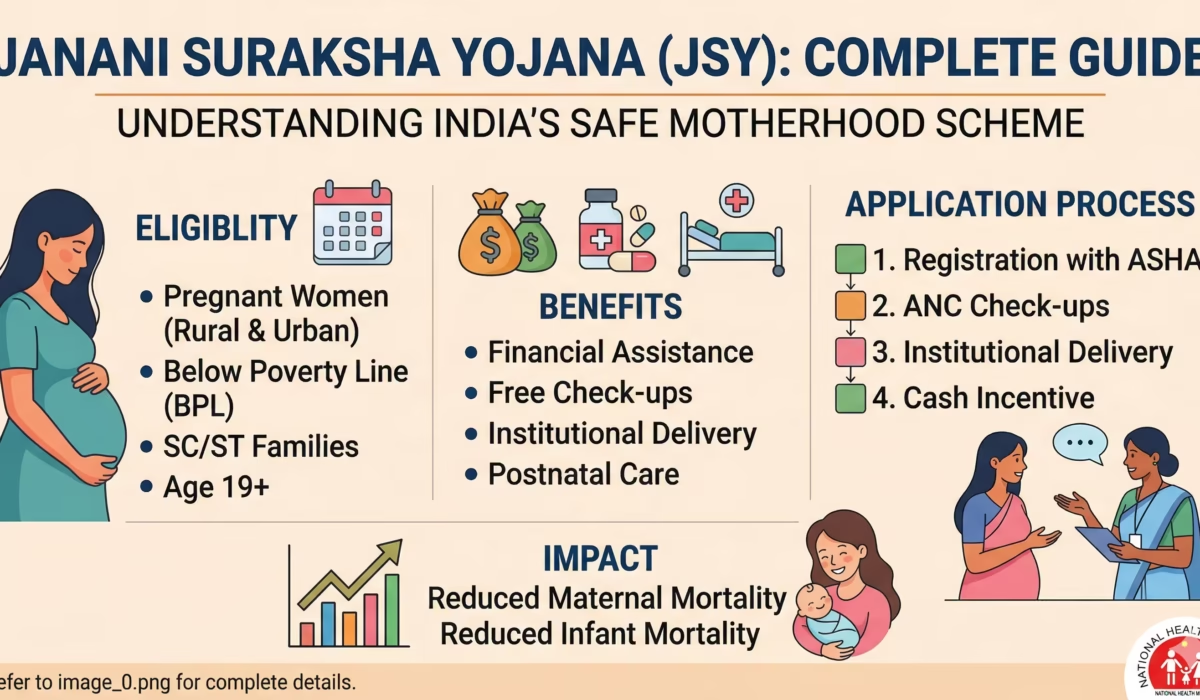
The Janani Suraksha Yojana (JSY) is a flagship safe motherhood intervention program introduced by the Central Government of India. Designed to reduce maternal and neonatal mortality, the scheme provides financial assistance to poor pregnant women to encourage institutional deliveries in government or accredited private healthcare facilities. By eliminating the financial burden of childbirth and integrating medical care during pregnancy, delivery, and post-delivery periods, JSY acts as a vital safety net for expectant mothers across the country, particularly those belonging to the Below Poverty Line (BPL) and SC/ST communities.
1. Overview of Janani Suraksha Yojana
Purpose of the Scheme The primary purpose of the Janani Suraksha Yojana is to safeguard the lives of pregnant women and their newborns. It shifts the trend of unsafe home deliveries toward secure, institutional deliveries handled by trained medical professionals, thereby lowering the Maternal Mortality Ratio (MMR) and Infant Mortality Rate (IMR) in India.
Launch Date and Implementing Authority The scheme was officially launched on April 12, 2005, by the Hon’ble Prime Minister of India. It is a 100% centrally sponsored scheme implemented by the Ministry of Health and Family Welfare (MoHFW) under the umbrella of the National Health Mission (NHM).
Target Beneficiaries The scheme targets pregnant women belonging to socio-economically disadvantaged backgrounds. While implemented nationwide, the scheme places a special focus on Low Performing States (LPS)—states with historically low institutional delivery rates (such as Uttar Pradesh, Bihar, Rajasthan, Madhya Pradesh, Odisha, Jharkhand, Chhattisgarh, Assam, Uttarakhand, and Jammu & Kashmir). In these states, the scheme is universally applicable to all pregnant women delivering in government health centers.
2. Key Highlights of Janani Suraksha Yojana
Here is a quick summary of the vital details regarding the JSY scheme:
| Feature | Details |
| Scheme Name | Janani Suraksha Yojana (JSY) |
| Launched By | Ministry of Health and Family Welfare, Govt. of India |
| Scheme Type | 100% Centrally Sponsored Direct Benefit Transfer (DBT) |
| Primary Beneficiaries | Pregnant women (focus on BPL, SC, ST) |
| Financial Assistance (LPS) | Rural: ₹1,400 (Mother) | Urban: ₹1,000 (Mother) |
| Financial Assistance (HPS) | Rural: ₹700 (Mother) | Urban: ₹600 (Mother) |
| ASHA Worker Incentive | Rural: ₹600 | Urban: ₹400 |
| Official Website | nhm.gov.in / Respective State NHM Portals |
3. Objectives of the Scheme
The Janani Suraksha Yojana is built upon several critical healthcare goals:
- Reducing Mortality Rates: To significantly decrease maternal and neonatal deaths by ensuring safe environments for childbirth.
- Promoting Institutional Delivery: To motivate expectant mothers to deliver their babies in hospitals rather than at home, ensuring immediate medical intervention if complications arise.
- Encouraging Antenatal and Postnatal Care: To ensure women receive essential check-ups, immunizations (like Tetanus), and nutritional supplements (Iron Folic Acid) before and after childbirth.
- Empowering ASHA Workers: To financially incentivize Accredited Social Health Activists (ASHAs) who act as the vital link between the community and the public health system.
4. Benefits of Janani Suraksha Yojana
The JSY offers comprehensive support to ensure safe motherhood. Understanding the JSY benefits in rural areas and urban centers is essential for eligible families looking to utilize government aid:
- Direct Cash Assistance for Mothers: Financial aid is deposited directly into the beneficiary’s bank account to cover childbirth and postnatal nutritional expenses. The amount varies depending on whether the mother resides in a Low Performing State (LPS) or High Performing State (HPS).
- Incentives for ASHA Workers: ASHA workers receive cash incentives (up to ₹600) for identifying pregnant women, assisting them with registrations, escorting them to the hospital for delivery, and conducting postnatal visits.
- Free Delivery and Care (via JSSK Integration): Through the allied Janani Shishu Suraksha Karyakram (JSSK), women receive free and cashless delivery (including Caesarean sections), free medicines, diagnostics, diet during the hospital stay, and free transport from home to the facility.
- Assistance for Complications: If government specialists are unavailable for C-sections or severe obstetric complications, the scheme provides up to ₹1,500 to hire private medical experts.
- Home Delivery Assistance: BPL women who choose to deliver at home are provided a flat financial assistance of ₹500, regardless of their state.
5. Eligibility Criteria
Understanding the exact JSY eligibility 2026 guidelines is crucial before applying. The criteria are categorized based on state performance and socio-economic status:
- Age Limit: The pregnant woman must be 19 years of age or older at the time of delivery.
- Parity (Number of Children): In High Performing States, the benefits are generally restricted to the first two live births. However, for SC/ST women, and women in Low Performing States (LPS), this parity restriction does not apply.
- Low Performing States (LPS) Eligibility: All pregnant women delivering in government health centers (SCs, PHCs, CHCs, district hospitals) or accredited private institutions are eligible, regardless of BPL status, age, or number of children.
- High Performing States (HPS) Eligibility: Only pregnant women holding a BPL card, or belonging to SC/ST categories, are eligible for cash benefits.
- Registration Requirement: The beneficiary must be registered with an ANM, ASHA, or Medical Officer and possess a valid Mother and Child Protection (MCP) card.
6. Required Documents
To ensure a smooth registration and rapid DBT transfer, applicants must have the right paperwork ready. Here are the crucial Janani Suraksha Yojana documents required:
- Aadhaar Card (Mandatory for Direct Benefit Transfer).
- BPL Ration Card or Antyodaya Anna Yojana (AAY) Card (Mandatory for HPS states; SC/ST certificates if applicable).
- Janani Suraksha Yojana (JSY) Card / Mother and Child Protection (MCP) Card (Filled out by the ASHA worker or ANM).
- Bank Account Details (Passbook copy of a single/joint account seeded with Aadhaar for DBT).
- Pregnancy Registration Certificate (Given by the Anganwadi or local health center).
- Hospital Discharge Summary / Delivery Certificate (To be submitted post-delivery for final payment).
7. How to Apply for Janani Suraksha Yojana
If you are wondering how to apply for JSY step by step, the process has been streamlined to ensure maximum accessibility for rural and urban populations.
Offline Application Process
This is the most common and recommended method, especially in rural areas:
- Contact your ASHA Worker: Visit your local Anganwadi center or speak directly to your area’s ASHA worker or Auxiliary Nurse Midwife (ANM) as soon as the pregnancy is confirmed (ideally within the first 12 weeks).
- Registration: The health worker will register the pregnancy and issue a Mother and Child Protection (MCP) card and a JSY card.
- Submit Documents: Provide copies of your Aadhaar, bank passbook, and BPL/Caste certificate to the Medical Officer at the Primary Health Centre (PHC).
- Delivery: At the time of labor, the ASHA worker will escort the mother to the government health facility.
- Claim Generation: Upon discharge, the hospital administration will process the JSY card and delivery certificate to release the funds.
Online Application Process
Many states are digitizing the process to allow users to Janani Suraksha Yojana apply online:
- Visit the State Portal: Go to your respective state’s citizen service portal (e.g., Aaple Sarkar in Maharashtra) or the State NHM website.
- Create an Account: Register on the portal using your mobile number and Aadhaar.
- Fill the Form: Select “Janani Suraksha Yojana” under the Health Department services. Fill in the e-registration form with the mother’s details, address, and bank information.
- Upload Documents: Upload scanned copies of the Aadhaar card, BPL card, and MCP card.
- Submit: Submit the application to receive an application reference number for tracking.
8. Application & Payment Status Check Process
Once the delivery is complete and the hospital initiates the claim, beneficiaries can track their payment status to ensure the funds reach their bank account.
- Via State NHM Portals: Most states have a dedicated “JSY Beneficiary Payment Status” link on their NHM websites. Users can enter their JSY ID, Aadhaar number, or registered mobile number to view the exact status (Pending, Approved, or Transferred).
- Via PFMS (Public Financial Management System): Since JSY payments are sent via DBT, users can visit the PFMS website (
pfms.nic.in), click on “Know Your Payments,” enter their bank name and account number, and see the exact status of the government credit. - Via ASHA Workers: Local ASHA workers and ANMs maintain ledgers of processed payments and can provide real-time updates from the Primary Health Centre.
9. Important Dates / Timeline
There are no strict yearly deadlines for the JSY scheme, as it is a continuous health program. However, pregnant women must follow this timeline to avoid missing out on benefits:
- Registration: Must be done early, ideally within the first 12 weeks (first trimester) of pregnancy.
- Antenatal Check-ups (ANC): At least three ANC check-ups must be completed prior to delivery.
- Fund Disbursement: According to JSY guidelines, the financial assistance should ideally be disbursed at the health institution in one installment at the time of discharge, or within 7 days of delivery following the ASHA’s postnatal visit.
10. 2026-Specific Updates
To improve transparency, reduce delays, and digitize maternal healthcare, the Ministry of Health and Family Welfare has implemented a few critical updates for 2026:
- ABHA ID Integration: The creation of an Ayushman Bharat Health Account (ABHA) ID is now highly recommended (and mandatory in several districts) for pregnant women. This links their health records and speeds up the JSY Direct Benefit Transfer (DBT) verification process.
- Stricter DBT Timelines: Under the updated 2026 NHM guidelines, state health departments are mandated to ensure that DBT clearances happen within 48 to 72 hours of hospital discharge for institutional deliveries, drastically reducing wait times for rural mothers.
- Digital Micro-Birth Planning: ASHA workers are increasingly using digital tablets and the state’s Anmol (ANM Online) applications to pre-register bank details during the 8th month of pregnancy, ensuring zero paperwork delays during the actual delivery.
11. Helpline / Official Contact Details
If you face issues with registrations, hospital admissions, or delayed payments, you can reach out to the official authorities:
- National Toll-Free Health Helpline: 104 (Operates 24/7 in most states for health queries and scheme grievances).
- Ambulance Services: 108 (For free transport to the hospital during labor).
- Official NHM Website: nhm.gov.in
- Local Contacts: Your village Anganwadi center, ASHA worker, or the Medical Officer in charge of your nearest Primary Health Centre (PHC) or Community Health Centre (CHC).
12. FAQs Section
Q1: What is the financial assistance provided for home deliveries under JSY? A: Eligible BPL pregnant women who prefer to deliver at home are entitled to a flat cash assistance of ₹500 per delivery, irrespective of their state or age.
Q2: Can I avail Janani Suraksha Yojana benefits in a private hospital? A: Yes, but only if the private hospital or nursing home is officially accredited and empaneled by the government under the JSY scheme. You will need a referral slip from your ANM/MO to claim the benefits there.
Q3: Is the Janani Suraksha Yojana available for the third child? A: In Low Performing States (LPS), the scheme benefits are available regardless of the number of children. However, in High Performing States (HPS), cash benefits are typically restricted to the first two live births.
Q4: How does the scheme ensure free transport to the hospital? A: JSY works in tandem with the Janani Shishu Suraksha Karyakram (JSSK), which guarantees free transport (using 108/102 ambulances) from home to the health institution, transfers between facilities in case of referral, and a free drop back home after 48 hours of stay.
Q5: What should I do if my JSY payment is delayed? A: First, verify with your bank branch if your account is actively seeded with Aadhaar. If it is, contact your local ANM or the Medical Officer at the PHC where you delivered, as they can track the DBT status on the centralized portal and resolve any document discrepancies.